IT'S TIME TO GROW UP
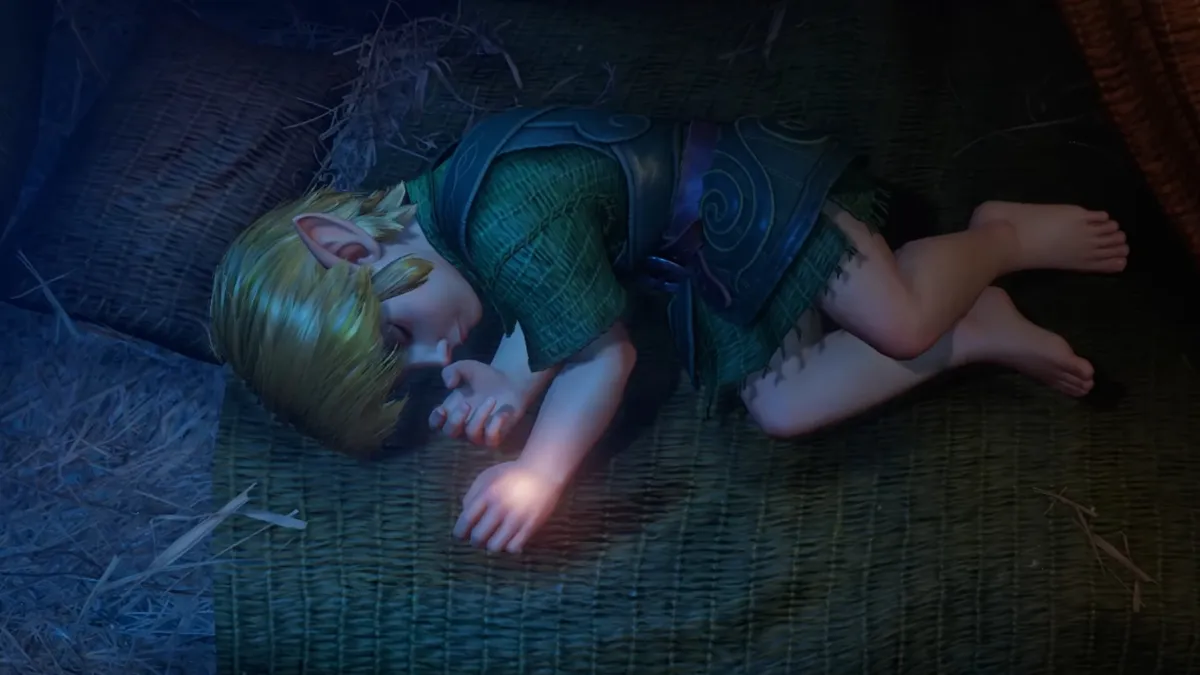
Summer Game Fest/E3 Season this year struggled to get out from under a dark cloud of its own making. More than any year prior, it felt as if the blinders of commercial-inspired giddiness had fallen off revealing the Glasgow Wonka Experience that the game industry has become1. Amidst mass layoffs and the overwhelming sense that platform powers are looking to squeeze consumers for every bit of disposal income they have (while cutting costs on their end), the ‘Fun Time’ hobby of playing videogames is not feeling very ‘Fun’.
I have long contended that the game industry is immune to the Legitimacy Gap. What this means in theory is that stakeholders of gaming publishers should be wary not to exhibit “a discrepancy between an organization's actions and society's expectations of this organization”. The reality in 2026 is that discrepancy does not interfere with good business. The original conception of the Legitimacy Gap in 1975 posited that it was worth closing because the discrepancy between consumer expectations and business practice could genuinely threaten the organisation’s position.
Lol. lmao, even. Instead, you have Gamers chasing their own tails (or the tails of minority groups) online trying to rectify the 'social rot' of their favourite companies by throwing their pale bodies onto the frontlines of culture wars. The armchair CEOing is an encouraged means of engaging with discourse, especially when CEOs of behemoth conglomerates are spending their earthly hours nuzzling the necks of professional chuds.
Meanwhile, game workers struggle to maintain their livelihoods and organise as these platforms further consolidate their power over the industry. It’s a bleak state of affairs and… what’s that? The sound of keys jangling?
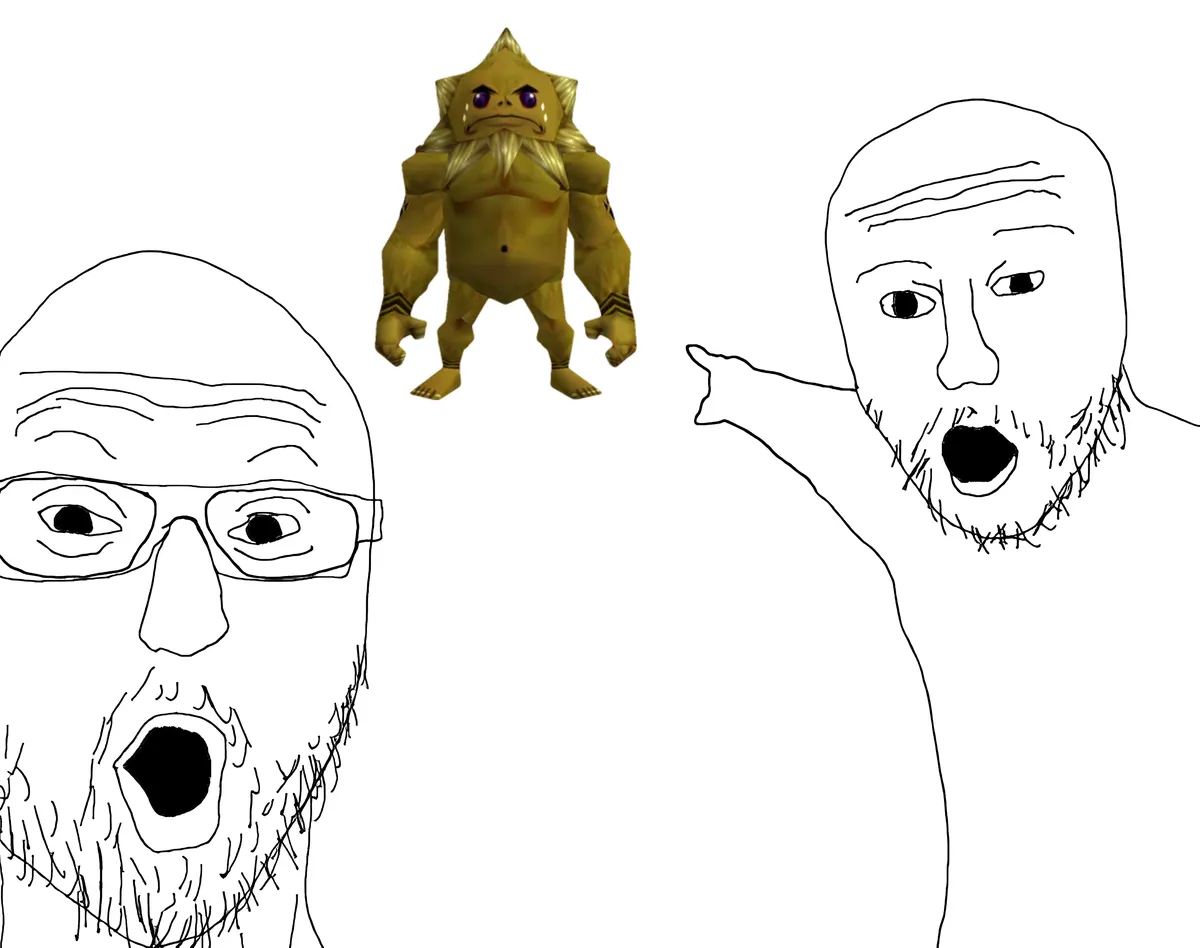
OH SHIT, THEY’RE REMAKING OCARINA OF TIME. MY CHILDHOOD!! I’M SAVED!!! THE LOST WOODS!!! HYRULE MARKET!! THE GORONS!! YIPPEEEE.
It does not surprise me that folk are responding so excitedly to the concept of a Legend of Zelda: Ocarina of Time Remake. Obviously no one likes the little Yassfied Link (pictured above). He has an adult's head on a child's body - he’s absolutely horrid. But the idea that Nintendo are returning to slap a coat of paint on the game that ‘changed it all’ the game that inspired a legion of Triforce tattoos on disenfranchised millennials, did evoke a sense of whimsy that many were missing in the Summer of Games 2026.
Sorry to say, I find this troubling. Ocarina of Time’s remake represents a cultural sickness in the hearts of the gaming public. It’s not your fault, or mine, or anyone’s really. To be clear, this is not a judgement on any one individual's choice or taste. It is simply to express that videogames exist within a Trash Culture (per Harper Jay in their inimitable essay ‘Games Criticism is a Kindness’) and Recycling Culture is part of that. I’ve discussed this at length prior but I do believe that leaning on remakes is one of the many ways that Platform Powers lord the legitimacy gap over the gaming masses: why invest in new, sustainable products when you can resell what works? Why offer a seat at the table when you can feed them on scraps?
What troubles me most is that Ocarina of Time Remake is antithetical to the core theme of Ocarina of Time. This is a game about growing up. Whether or not Link leaves Kokiri Forest - where the inhabitants never age - he would have to grow up. But even within the act of leaving, he grows up. The story of OoT is fundamentally about leaving your childhood behind and taking responsibility in ways a child cannot. In life, sometimes you have to be an adult, as much as you miss and cherish your own innocence. But the act of growing up is not some unjust innocence lost. It’s simply trading a wooden shield for something more proportional.
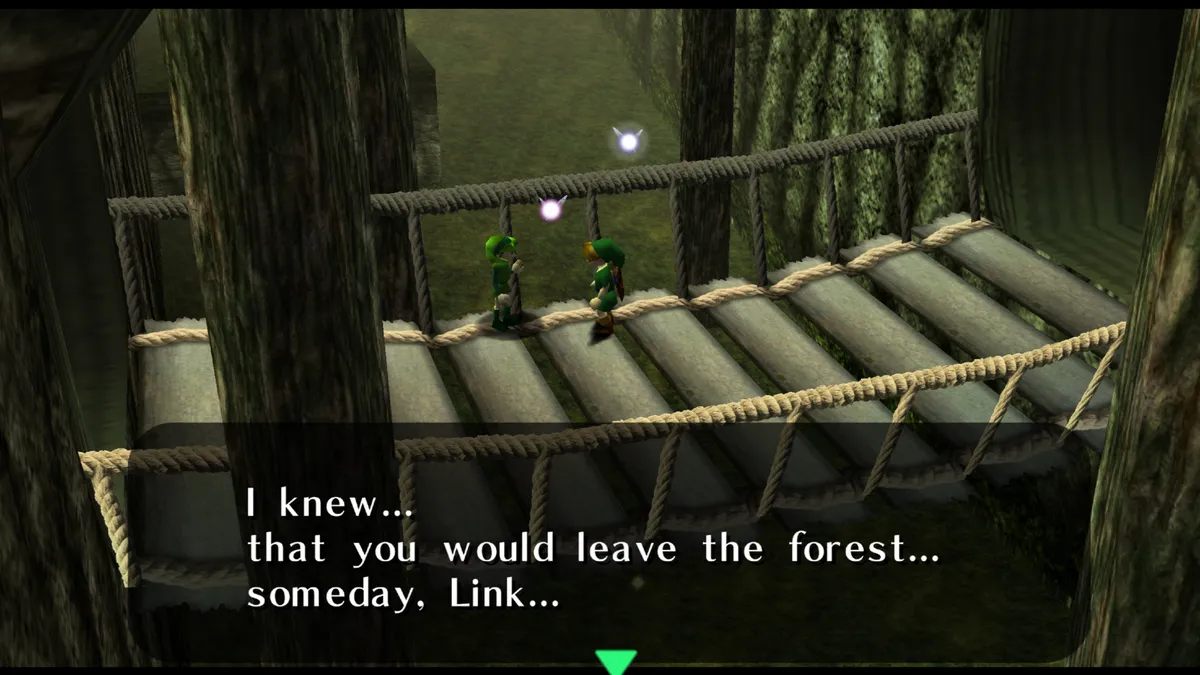
Growing up is realising that you could never have stayed in the sanctuary and comfort of the Kokiri Forest. And that’s what today’s treatise is about: our relationship to games has to grow with us. Our childhood is gone and while there’s value in reflection, a mewling attachment to the hazy memories of our past is a blight on our cultural development as a community. The Platform Powers want us misty-eyed, staring across the long, sunken bridge to the Kokiri Forest but we owe to ourselves and the health of the industry to turn our backs to it.
Your relationship to games does not have to be governed by platform power. Your relationship to the games you love is mostly about you and your memories. It has very little to do with the games themselves so don’t let the Platforms convince you otherwise.
I want to couch the word ‘Industry’ within the concept of ‘Industry-via-Discourse’ which helps elucidate the industry as a construction of how we talk about it rather than a monolith that encompasses all game production.↩