JOHN WICK THE MOVIE: THE VIDEOGAME: THE VIDEOGAME
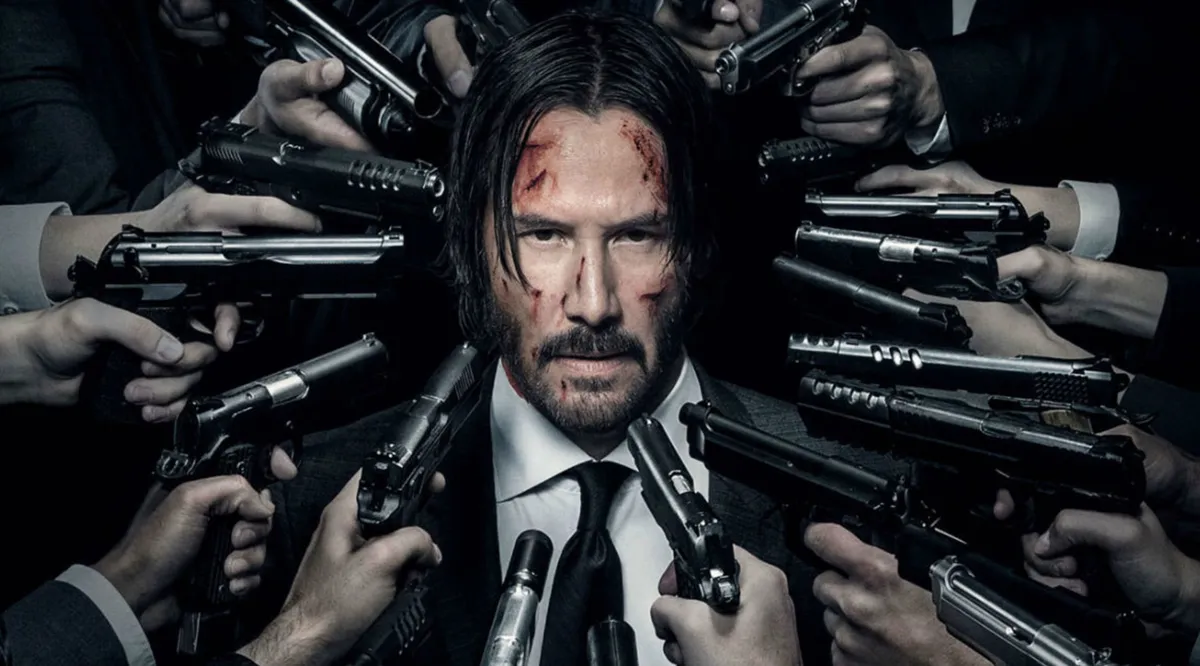
Last night at the PlayStation State of Play advert extravaganza, a new currently untitled John Wick game was revealed. The trailer weaves between scenes of the legendary assassin undergoing a tailoring session with a number of brutal fights depicting scenarios that played out in some form across the four Wick films. It’s an impressive display of animation and visual fidelity and, hey, it’s Keanu Reeves from all of those compilations of ‘Keanu Reeves being a nice guy’ on YouTube. But what are we doing here, chums? There is no need for an Untitled John Wick Game because the John Wick films are already video games.
In aesthetic theorists… wait, wait, don’t go, I promise we’ll get back John Wick soon!
In the early 80s, aesthetic theories, curious around the ‘interactivity’ of art, started to dip their toes into the work of reception theorists. Reception studies is simply the field concerned with how audiences engage with texts, how they receive meaning, negotiate it and reproduce it. Much ink was spilled about how the only truth to be found in film (or any artistic production) was uncovered in the act of spectating. Before interactivity in the arts became shorthand for ‘pressing buttons’, it referred largely to the subjective meaning making of audiences experiencing art. In The Open Work, Umberto Eco described texts as “fields of meaning” open for us to frolic in and make sense of. Watching a film is an interactive experience inherently but, for the purposes of this blog, I believe that watching and interpreting a film is also an exercise in active play.
The John Wick films borrow so much visual language from video games. I would have said this even before the top-down Hotline Miami sequence in Wick: Chapter 4. The John Wick films are third-person cinematic shooters. They’re light on dialogue, the main character has a health bar that’s balanced for fighting hundreds of enemy combatants, it has a playful relationship with violence, and even has huge set pieces for its climactic boss fights.
So whether you want to approach it in form (film) or function (genre), the John Wick films are as videogame as a film can be; as much as 12 Angry Men is a visual novel. The reality as I see it is that the boundary between these mediums is more fluid than is convenient to consider. Interactivity doesn’t make a visual art - like film - a ‘game’ anymore than featuring Hollywood actors makes games films. It’s more complicated than that and is only going to get more complicated as games ask less of us (see: Sony AI patent will see PlayStation games play themselves when players are stuck).
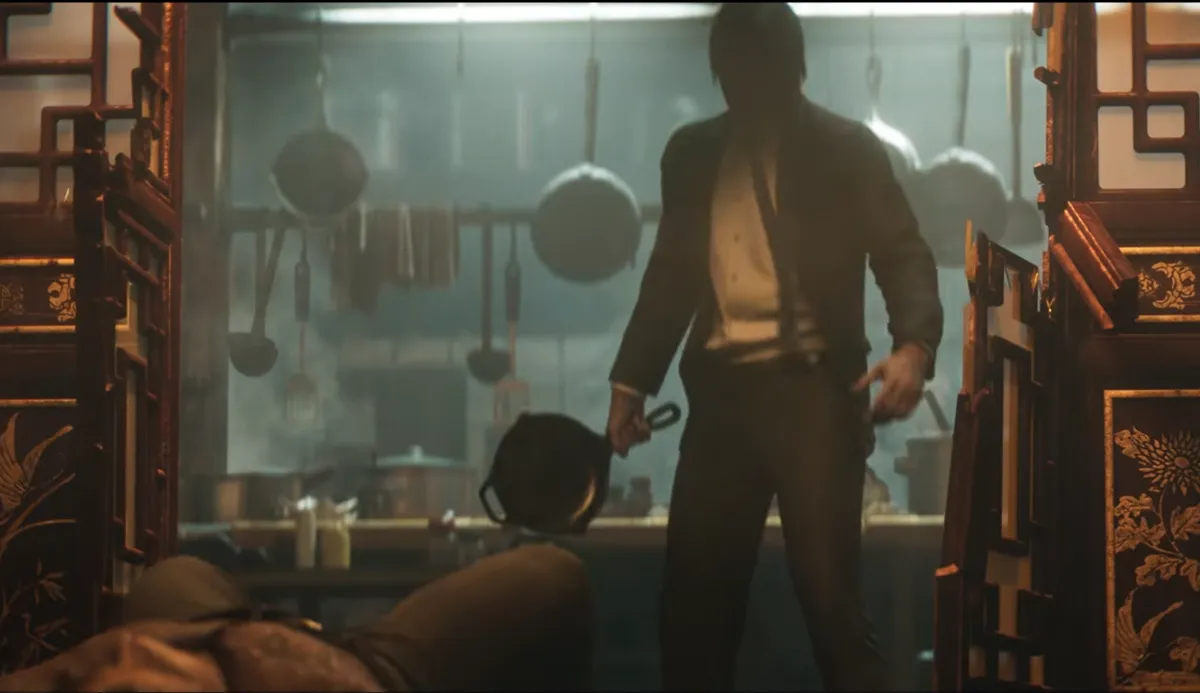
During the John Wick reveal I saw a post that said something to the effect of “All videogames are John Wick anyway”. Which walks backwards into what I’m trying to argue here. John Wick uses the visual and mechanical vocabulary of videogames because videogames transposed that language from Hong Kong Action Films. It’s a cyclical process of transcreation, each step amending the texture of the core ideas of the action genre at play.
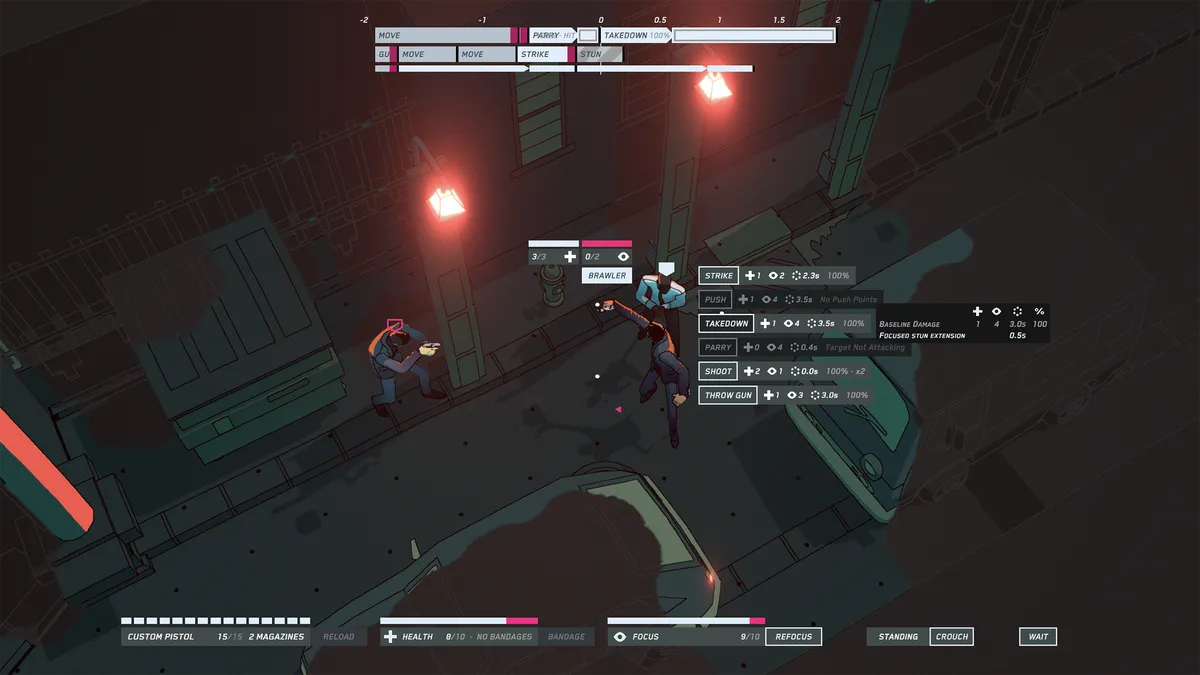
The Untitled John Wick game is not transcreation, it’s redundant. Even if it acts as a companion piece to the films or a new story told in this medium, it doesn’t take away from this feeling that a triple-AAA action game is perhaps the least interesting way of exhibiting John Wick. Bithell Games’ John Wick Hex took the cinematic origins of the series and performed mechanical invention by re-appropriating the timeline function of media editors and turning it into a piece of strategy game UI.
We’re all tired of the discourse around remakes, remasters and studios not wanting to take risks of new worlds and stories, I get it. But Untitled John Wick is a particularly egregious example. If we’re going to live in a culture of adaptation, these safe-bet games should at least generate new meanings and avenues for exploration. I don’t want a quick-time event where I press X to puncture a guy’s ear with a pencil, he falls to the floor, I point at the screen, mouth agape, exclaiming “it’s just like the movie!!”.
Yeah, that’s the problem, it’s just like the movie.