KILLJOY PRESENTS: THE BEST OF 2025

Last August I had a conversation in the sweaty halls of Gamescom with a couple of journalists about the state of the games industry. We were bemoaning the ways in which the corporate presence is gutting our proverbial home for parts and polluting the culture in the process. We also discussed Brendan Keogh’s essential 2023 book The Videogame Industry Does Not Exist. Early on, Keogh posits that we have reached an inflection point where we must consider the commercial ‘industry’ - both AAA and indie - as an independent sect to games culture writ large. The commercial juggernaut is one big part of it - a bloated, unavoidable part of it - but it is not all of games as a culture.
I believe a lot of the frustration with the games industry can be solved by compartmentalising it from one’s personal connection to the games form. Someone with a passion for nature journaling should not spend their energy concerned with the developments in deforestation technologies. The AAA games space shapes the culture but it is not its entirety.
This has been a very helpful framework this year for codifying the (obviously) important issues plaguing games cultures with the wonderful games that rattled around my skull this year. Without further ado, here is the “killjoy best of 2025 list”
Despelote
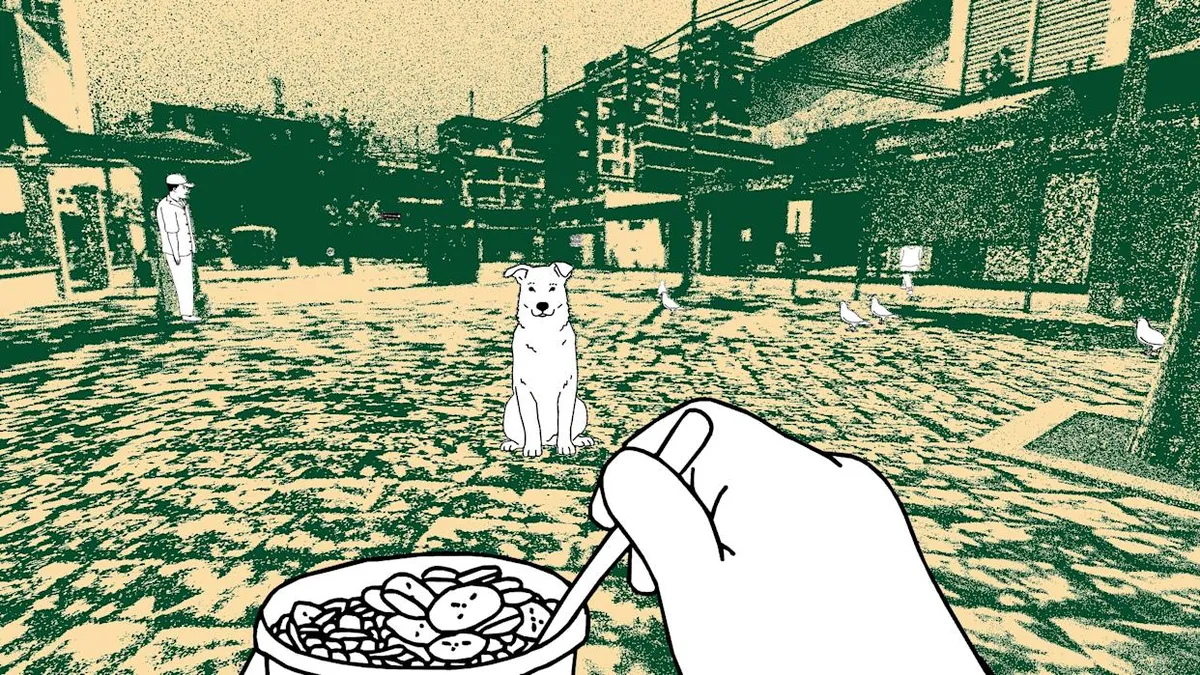
The year’s true indie darling, Despelote’s greatest achievement has been stealthily asking indie game players to reflect about why football is called the Beautiful Game. Set during Ecuador's qualification for the 2002 World Cup, Despelote is a first-person adventure about experiencing that specific moment in cultural history from the perspective of an eight-year-old boy. The graphical style employs grainy photos of real-life locations to evoke the hazy fidelity of recalling childhood. My adoration for this wonderful, albeit short, game is that it is exemplary of what the future of independent games can be. It speaks to a very specific moment in time, from a very specific perspective and has the generosity to attempt to share that with the world.
Death Stranding 2
This year was the year the word slop lost its power. It once was a perfect deployment of humour and judgement that could be trebucheted at any and all AI-generated tripe. But now it just means ‘type’. Anything that follows the pattern or trappings of any other thing: it’s slop. Which is great for pigs, who can’t tell the difference, but we can and we should.
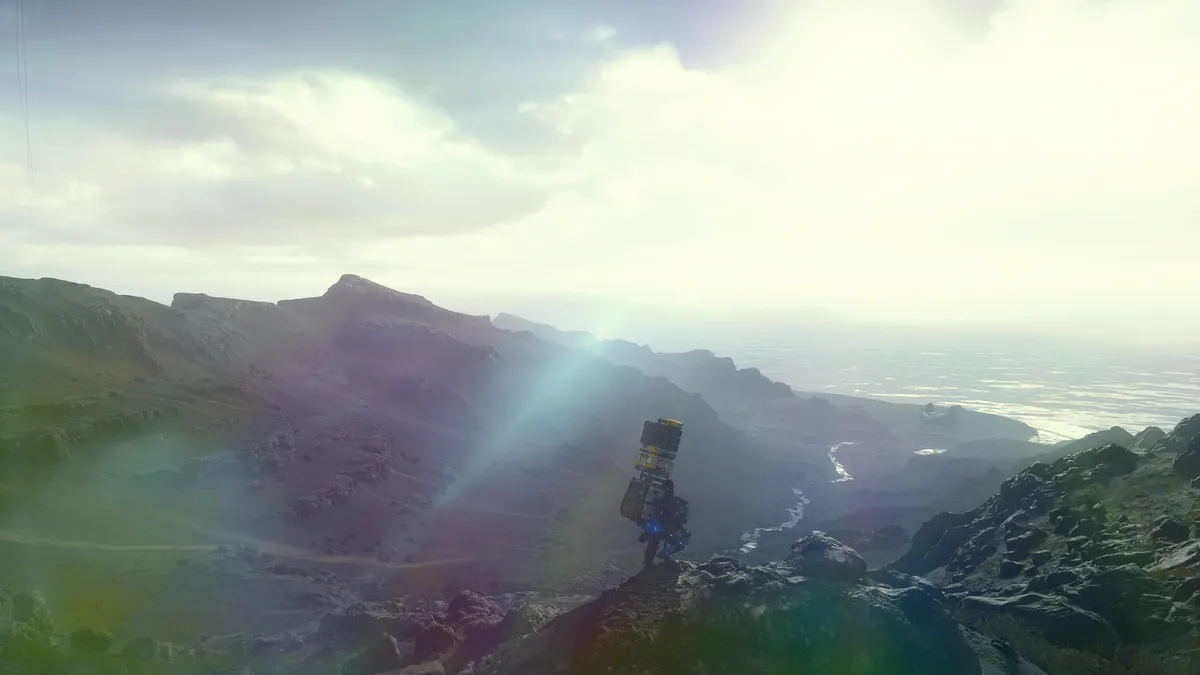
Death Stranding 2 is as AAA as a game comes. It’s got an open world, a star-studded cast, a technically impressive visual suite and a price tag that goes with it. But it’s also a Kojima-directed design. My contention is that the games Koj puts his fingerprints on are the opposite of slop.
My favourite definition of ‘slop’ comes from Max Read that describes it in his newsletter: “Slop” is that which is 'fully optimized' to its domain to the point of texturelessness or characterlessness". Death Stranding 2 is so far from optimized, it’s almost funny. But in that lack of optimization: the completely uneven storytelling, the risk vs reward delivery gameplay, and the additional 30 hours that probably could have been cut - some of my favourite moments of any Kojima-directed game emerges. The smooth road feels good because you had to traverse the rough first, that’s the whole point!
Skate Story
Hollow Knight: Silksong
Last summer I read a great conference paper by Fabrizio Matarese from the University of Turin on the Dark Souls series and the ways it resonates with the philosophical tenants of stoicism. What struck me as notable was how Matarese positions the Dark Souls’ series challenging design as a deliberate process that is attempting to actively tempers the players’ psyche; to make them “insensitive to physical evil”.
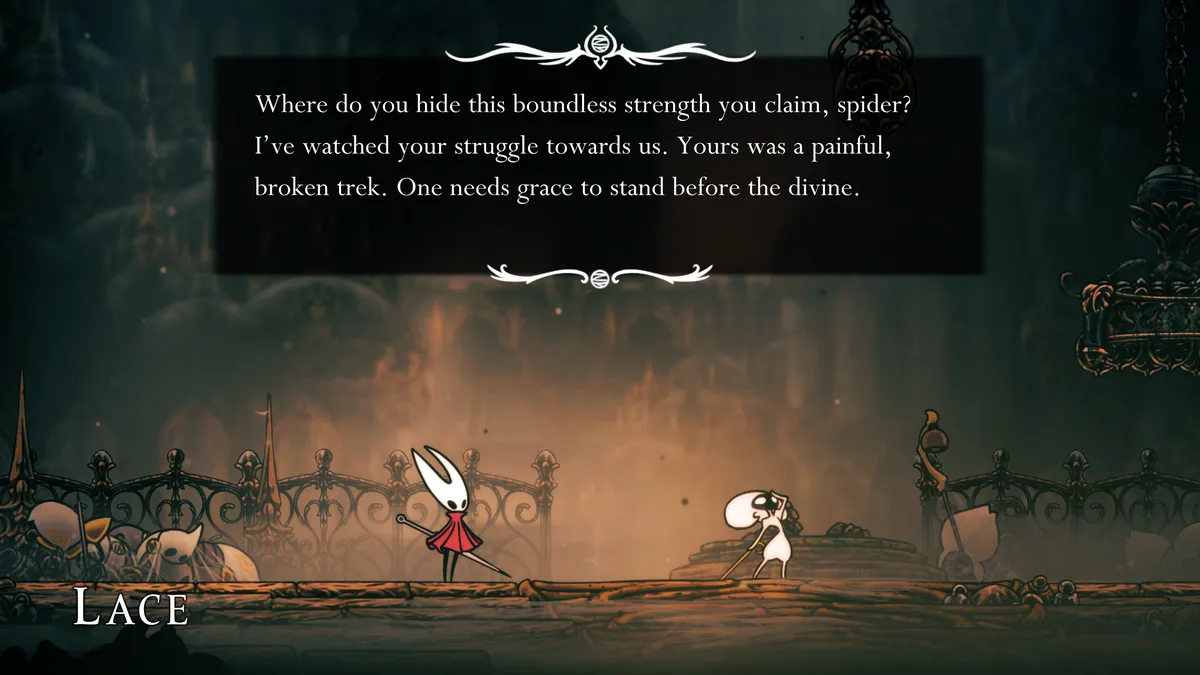
Team Cherry’s long awaited Hollow Knight: Silksong resonates with this idea to an even more extreme degree. The initial response to its unexpected difficulty perhaps speaks to a lack of mental tempering from its players - their expectations of their abilities mismatching what the game is asking of them. This is not a judgement and I’m not exempt from this.
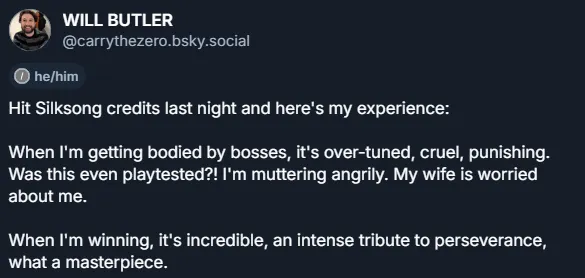
But as you progress through Pharloom’s swamp-mired underbelly (fuck Bilewater, all my homies hate Bilewater), its corrupted cathedrals, and battle foes possessed by an increasing insensitivity to mercy, you learn to temper yourself. Each of Hornet’s moves becomes deliberate, each swipe calculated with a greater precision. A mantra I found myself repeating is the game isn’t punishing me, it wants me to succeed. And success doesn’t just mean rolling credits. Success is determined by one's ability to not let the doubts and frustration blind you to what is a masterpiece in psychological design. Through the management of my negative passions, to overcome my own fury and obscuring sensitivities is to see the game for its beauty.
Magic: the Gathering - Edge of Eternities
It's been a rough year for my favourite card game. For the past 30 years, Magic: the Gathering has been largely defined by its incomparable core gameplay and its tight adherence to a aesthetic quality - 'Magicness'. That 'Magicness' can be applied across the multiverse and genres - from the gothic horror of Innistrad to the middle ages war cultures of Central and East Asia in Tarkir.
The announcement of a space opera setting for the card game was met with raised eyebrows; especially amidst a 'Fortnite' inspired spree of BRAND INTERGRATIONS across 'Universe Beyond' sets. At the end of 2025, it's safe to say that Magic's take on science-fiction is extraordinary.
Seamlessly blending Magic's finicky identity with neo-fantasy aesthetics, and a dynamic suite of space-inspired mechanics - Edge of Eternities is a astronomical success. The designers took cues from the likes of Ann Leckie's 'Imperial Radch' series more than they did Star Trek and the result is a technicolour storm of novel science fiction. Nihilistic zealots are locked into centuries long wars with imperial monarchs, inter-dimensional beings weave across the galaxies for inscrutable reasons, and denizens of old empires attempt to find a new home in a galaxy that is being torn in two by entropy.
I cannot stress enough that this wildly complex world is all playing out across under 300 cards. Cards that may be forgotten as Magic's 2025 will be notarised as the year The Office's Dwight Schrute entered the Magic multiverse. From my vantage point, Edge of Eternities is the platonic ideal of 'Magicness' in a landscape where corporate interference is ripping the fantasy out of our game's reality.
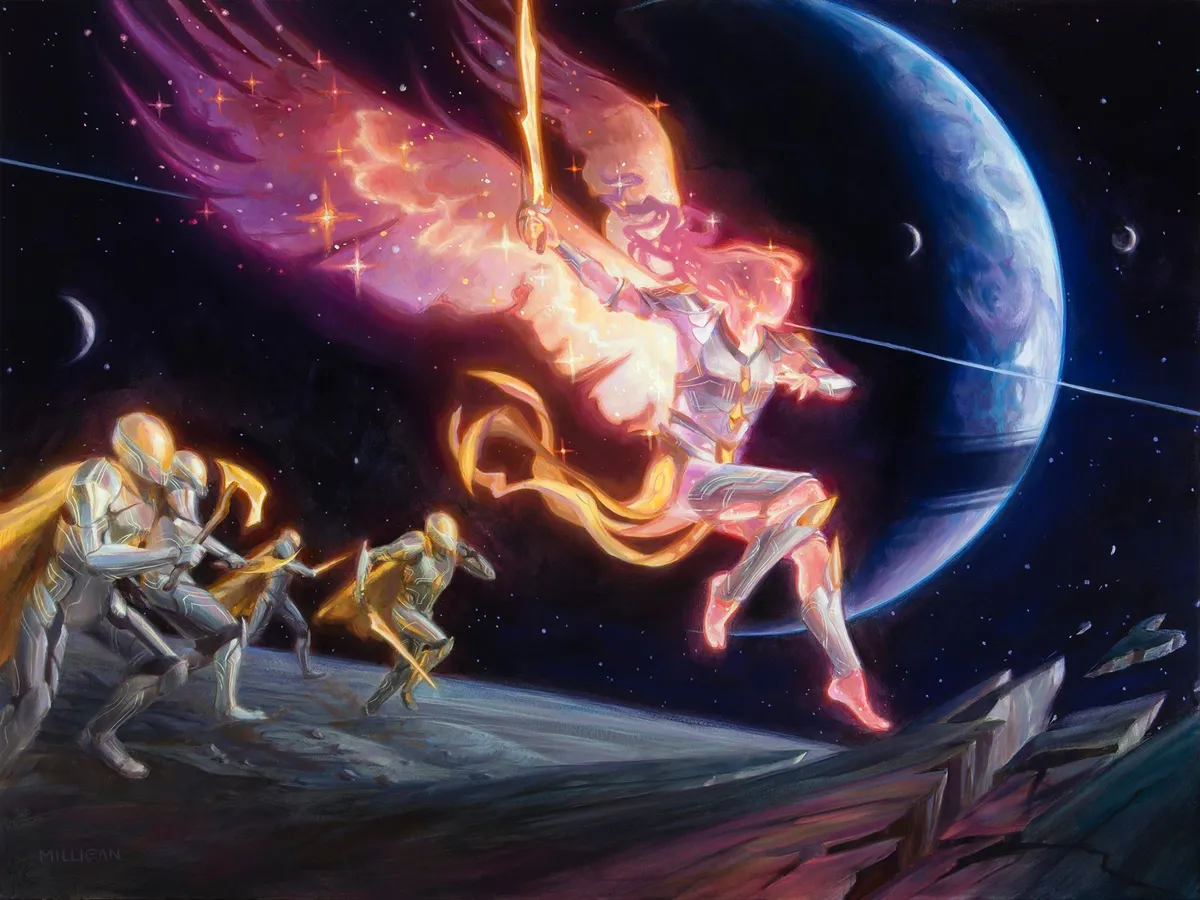
Astelli Reclaimer by Carly Milligan