JOHN HIGHGUARD HAS COME UNSTUCK IN TIME.
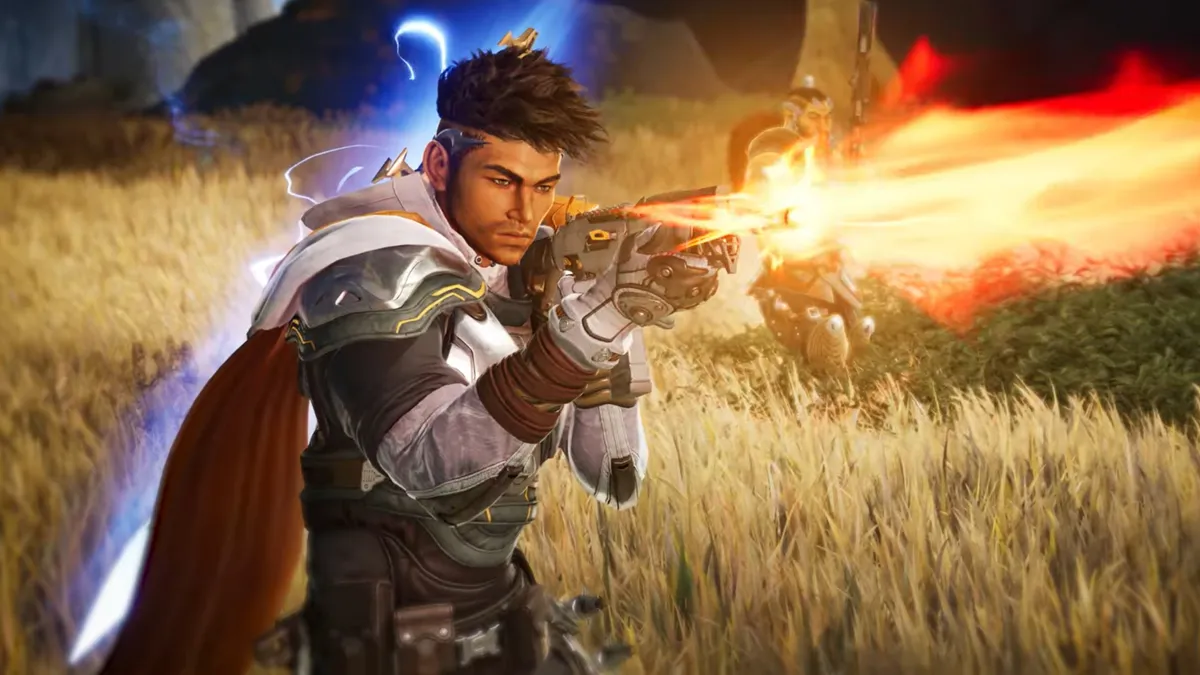
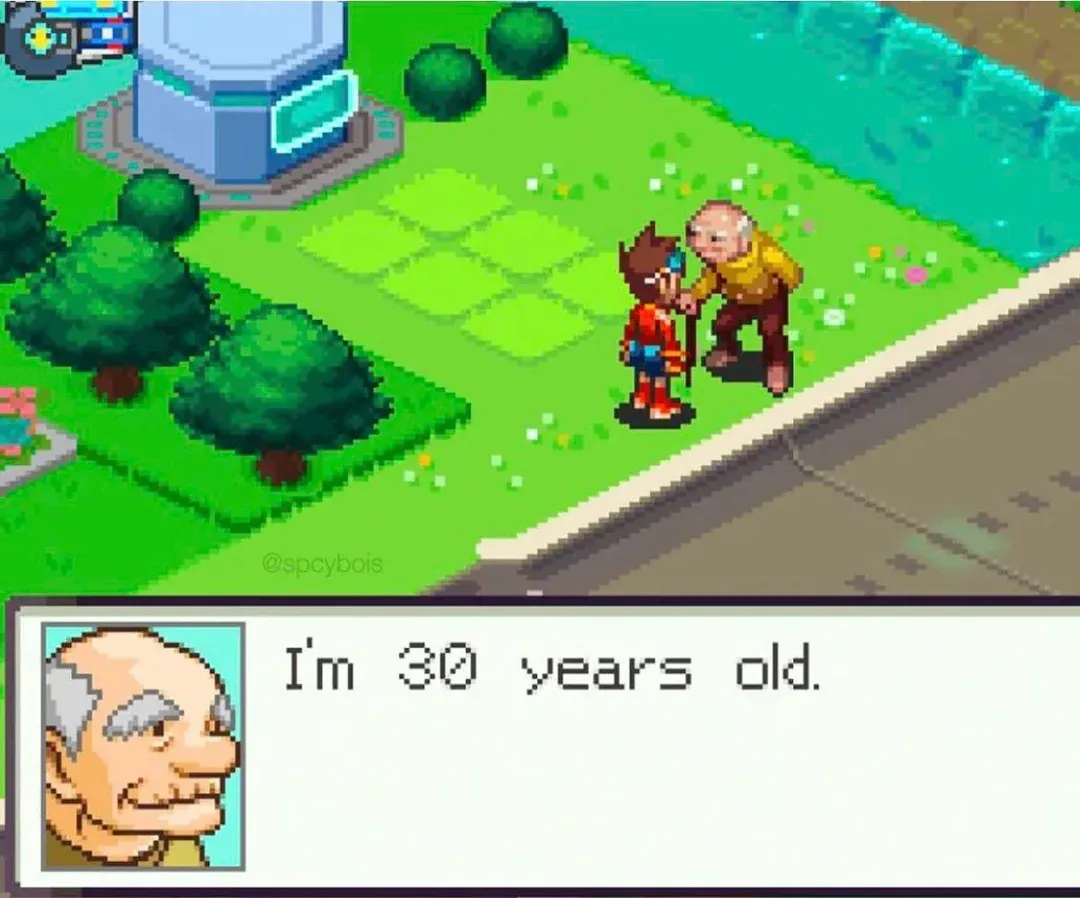
John Highguard has come unstuck in time. John has gone to sleep a consummate gamer and awakened arthritic. He vaulted into a mech in 2017 and landed on a horse in 2026. He has fallen off that horse to find himself escaping an enclosing ring of antimatter in 2019. He has seen his rebirth and death many times, he says, and pays random visits to all the games in between.
Highguard is a free-to-play, 3v3 online multiplayer shooter from some of the developers behind Titanfall 2 and Apex Legends. John Highguard, colloquially named in retaliation for Highguard's cryptic launch, represents a cycle of newer multiplayer shooters that are considered an affront to the medium of games by the Internet Gaming Community - most of which don't really play games. It is astonishing how uncontroversial its quality is. It is one of those shooters: not particularly revolutionary, not offensively bad. Not that I’m a good judge. When it comes to shooters, I too am unstuck in time.
My mind and body are dislodged between realities. My mind believes I am a decent multiplayer shooter player despite not playing one ‘seriously’ since Titanfall 2 in 2017 which was, what? Four years ago? My body, despite being stronger than it has ever been, is stiff and sluggish once the firefights begin. When the bullets rain down at seemingly convex angles, my shields pop and my health begins to tank, my body constricts, my hands tighten and I become unstuck in myself. A frustration bubbles as my mind tries to puppet my body into ducking into cover or shooting back or deploying an evasion ability. Instead, I wiggle my reticle around until I’m dead. This process occurred over and over in the five or so hours of Highguard I played. I was not improving one iota. By sitting in that frustration, by wrestling with an angst that my reactions had been dulled by the years, I found clarity: maybe these games have left me behind and maybe that’s okay.
Victor Navarro-Remesal has a wonderful new book out from MIT Press called Zen and Slow Games. It is an approachable academic rumination on the ‘reflective games’ of our past and present and the avenues they open for us as players. Bouncing off Highguard as I did, I was curious about Victor’s passages about shooter games and specifically anything that could help me cope with that geyser of frustration that comes in those tense moments, those moments that make me enter a new level of anti-zen.
In exploring the idea of a “Zen Shooter”, Navarro-Remesal discusses the technicolour, musical shooter Rez with developer Eddy Boxerman, whose work is very much of the same philosophical lineage as Tetsuya Mizuguchi’s. “Zen games can use any mechanic as long as the player does not feel aggressive”. This is a fascinating typology for shooter games. Genres are typically beholden to mechanical properties: shooters are shooters because you shoot, platformers are platformers because you platform.
I like that this reappraisal of ‘zen games’ isolates a feeling in a non-prescriptive way; note that Boxerman didn’t say zen games relax you, they just don’t aggravate you. And this leads me to where I am today and the shooter I’m finding a real sense of zen within, Star Wars Jedi Knight: Dark Forces II.
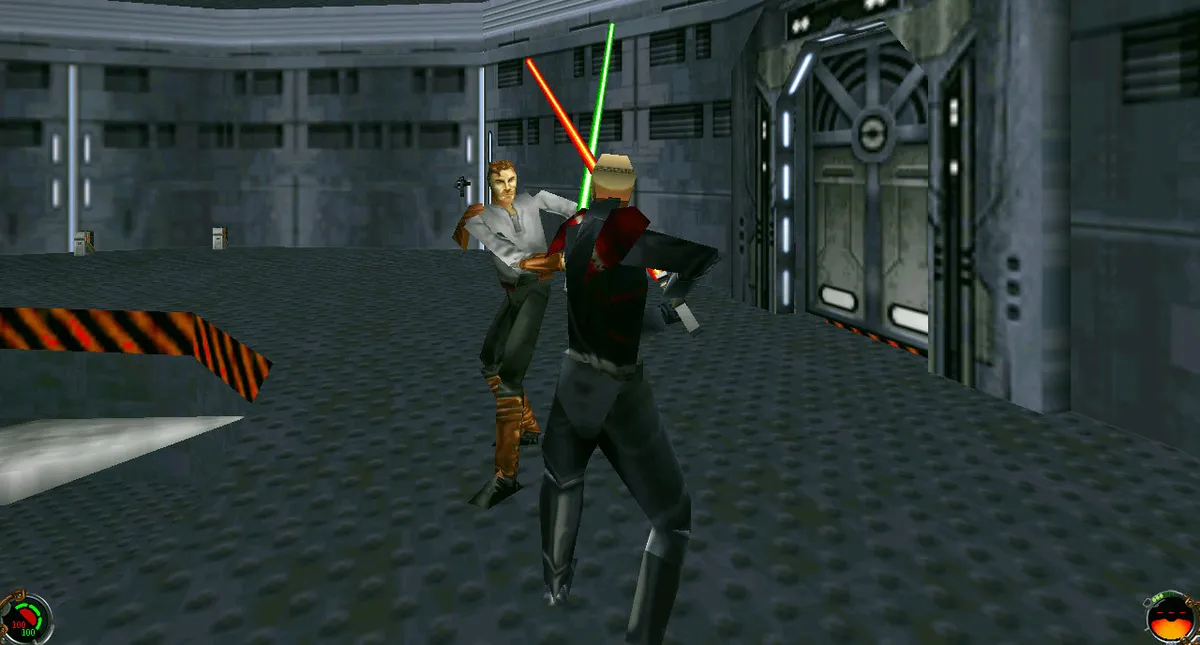
Dark Forces II is a classic FPS that operates within the Doom-mode. Each of the 21 stages is preceded by an incredibly chopped and earnest FMV cutscene with levels that have been designed by a team that takes their cues as much from M.C. Escher as they do I.D Software. There are a handful of enemies sprinkled across each level but they die without much fuss. The real magic is navigating these wonderfully intricate puzzle spaces. When I stop to pull up a projected map that sits on top of the FOV and hinders more than it helps, there is a palpable sense of calm that comes over me. The game world is still and so am I.
Playing early PC shooters speaks to a type of play that modern FPS’ simply cannot provide. That ‘ma’ in a Japanese sense - translating to something like “space for thought”. ‘Ma’ is used in film to give action sequences meaning, a slow tracking shot of a landscape before a fight to remind the viewers what our characters are fighting over. These PC games of the 1990s, by design or restriction, provide these moments to reflect. This is what I need and what Highguard or Apex Legends cannot give me: the stillness that precedes the firefights. I'm starting to think that I’ve never wanted excitement, I’m unstuck in time seeking dynamism.