I HATE SKATEBOARDING.
The earth is defiled by its people;
they have disobeyed the laws,
violated the statutes,
and broken the everlasting covenant.
Isaiah 24:4-6
Skateboarding is an enterprise of ambition. The hobby begins the first time you see a person play footsie with gravity, launching themselves impossibly from earthly tether and planting themselves back on the ground with a clatter that imitates applause. Then you try skateboarding. And you’re young, maybe, so you don’t have full control of your mass and you fall. And you fall again. And you hit the ground like a bouncy ball until the time between the falls decreases enough to learn to work in tandem with momentum until you, your feet, the wood, and the concrete are in harmony. Your aspiration becomes manifest.
Time passes, you grow up. At 29 you pick the board up again. Not old by any stretch of the imagination but your aspirations have changed and your bones have subsequently transmuted from rubber to glass.
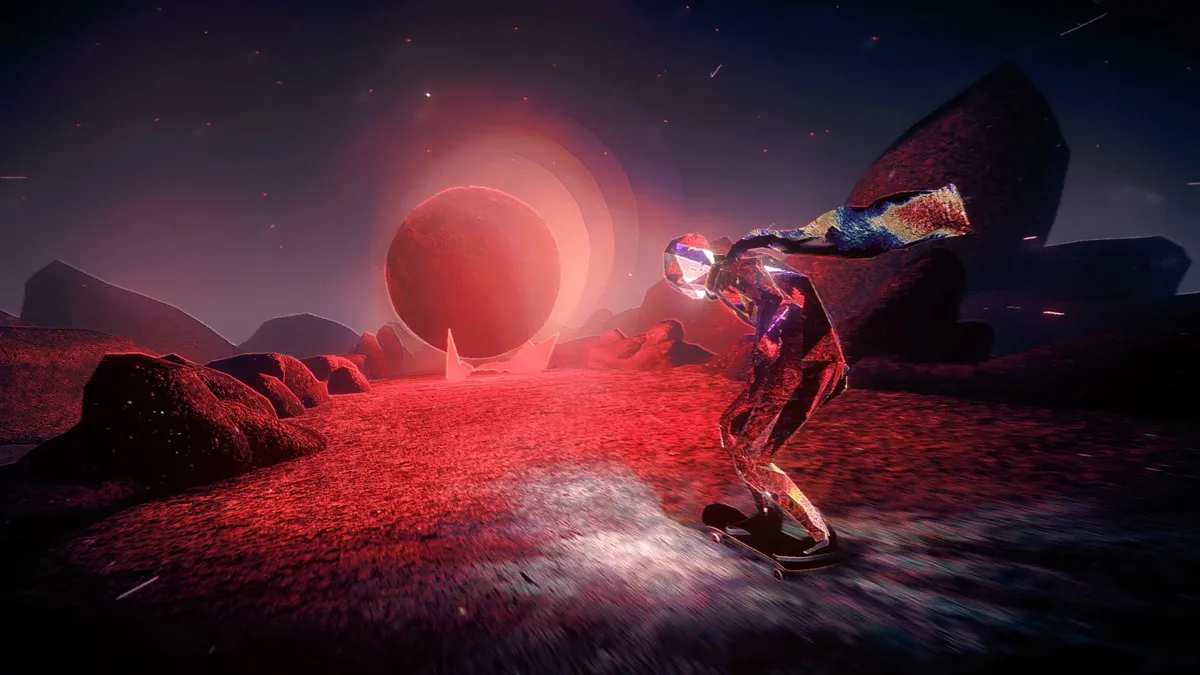
Skate Story by Sam Eng and Devolver Digital is a game about wagering pain against aspiration. You are a demon made of glass and pain, the game narrates, that aspires to eat the moon, a celestial foe that maintains the eternal night. To do so, The Skater will grind, fliptrick, and rip through the layers of hell eating the seven coloured moons and claiming their soul back. Its story operates under dream logic but its mechanical underpinnings are firmly grounded.
Following the same control scheme as most skating games, Skate Story has an immaculate understanding of momentum and weight; closer to EA's early iterations of the Skate series (more on that later) than Tony Hawk. However, the crucial context for Skate Story is that skating is the only form of expression any denizen of hell has. The other citizenry across the layers are trapped in bespoke tortures ranging from reliving lost love to entrapment in a coffin that's made up to seem like heaven. In Skate Story, skating is weaponised to defy arbitrary laws, written by invisible bureaucrats, enforced in places they don't even live.
Skating culture, historically speaking, has always been about the expression of autonomy. A reclaiming of public spaces as playgrounds or theatres of accomplishment. Skate Story builds this into its conceit. The Skater is derided by the authorities for exercising their agency, for daring to aspire to something more meaningful than a torturous existence. But to do so, they endure great pain, illustrated by the shattering of glass as the demon fails to land a grind cleanly or clips a sharp wall at the end of a line.
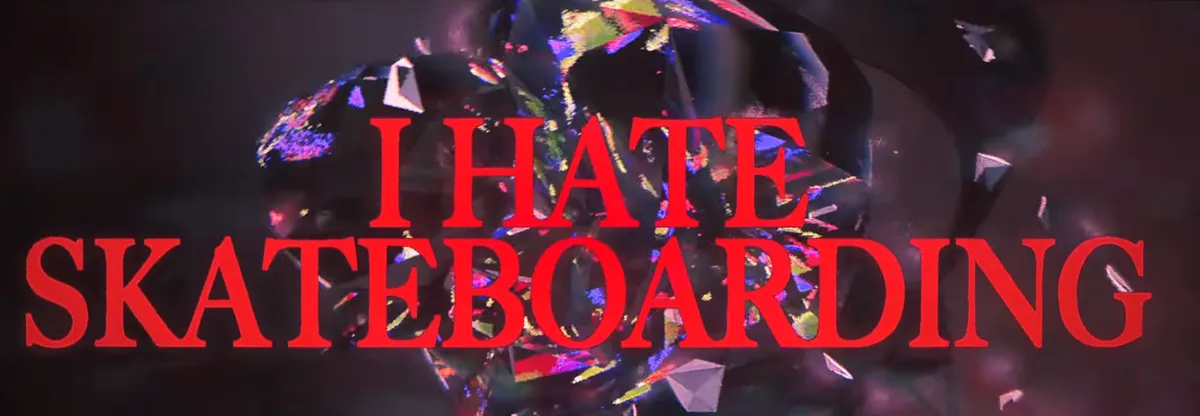
The Skater persists because the culture demands it. At one low moment where they declare "I HATE SKATEBOARDING" slumped over themselves on a steel chair a la Shinji Ikari. The declaration of misdirected hate eventually is turned toward the appropriate authority:
"I will crawl through my own glass shards. I will scrape the joy from this infernal sewer. I will burn the brambles around my soul".
Now this is what skating is about.
By the letter of the law, skateboarding is legal in public spaces in the UK. However, society's internalised derision of young people exercising their own freedoms can often spawn ad-hoc community support officers out of citizens with a wonky sense of justice. But skating in the face of this judgement has always galvanised the culture: aspiring to greatness, to build community in spite of whatever covenants are being used to restrict the pasttime. Skating does not defile the land anymore than the law protects it. Blow it out your arse, Isaiah.
Skate Story embodies this struggle and the pain associated with it. 2025's other skating offering, EA's free-to-play Skate, is more interested in presenting a sedate, corporatised vision of skateboarding imagined by, as Luke Plunkett wrote for Aftermath, "a theater kid improvising as a serial Linkedin poster".
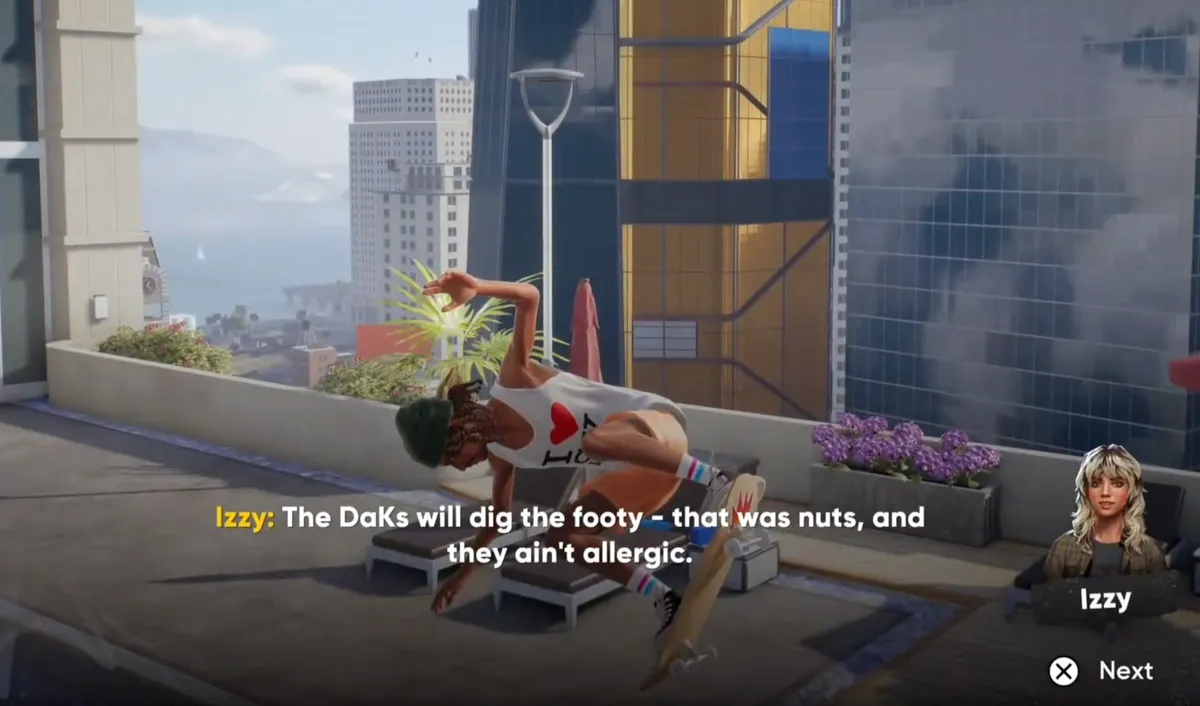
EA's Skate is set in a North American skate utopia where everyone is a competent skater and, paradoxically, there is technology developed to ensure that everyone is protected from any pain or damage or any sense of risk or excitement. Remember what we said about skate culture being defined by circumventing permission structures? Remember what we said about the importance of pain as symbolic of aspiration? Forget that! What if skate culture was instead about consumption!? That's the vision of the hobby that most players are encountering.
Skate Story understands that skating is about expression, autonomy and accomplishment more than it is its aesthetic trappings. I can't think of a more powerful focaliser of autonomy than seeing a glass demon laser-flipping off a manual pad into a perfect bank, but that's just me.